
Our first visit to Gandhi Sagar Wildlife Sanctuary took place in September 2023, following an invitation from the Forest Department to support them in the early phase of the cheetah reintroduction in the landscape. The invitation was driven by a clear need to build trust and strong working relationships with cattle-grazing and forest-dependent communities, whose everyday lives are closely tied to the sanctuary and whose voluntary participation would be central to the success of the conservation effort.
Gandhi Sagar is a landscape under rapid change. Alongside the arrival of cheetahs, the region faces increasing pressure from infrastructure development, shifting land-use patterns, and intensifying human–wildlife interactions. From the outset, we recognised that conservation here could not be limited to species protection alone, but had to meaningfully include people as active partners in the process.
We chose to engage in the landscape with the intention of building a long-term, community-rooted presence, grounded in locally relevant solutions rather than short-term, project-driven interventions. The initial phase focused on listening, learning, and relationship-building. We worked closely with local grazing communities – Charan and Gurjar pastoralists, the tribal Bhil community alongside forest staff, local village institutions (Gram Panchayats, EDCs), and other government departments, to understand local realities around livestock and grazing dependence, conflict patterns, and existing support systems. This groundwork helped identify priority villages, vulnerable groups, and on-ground gaps requiring immediate attention.
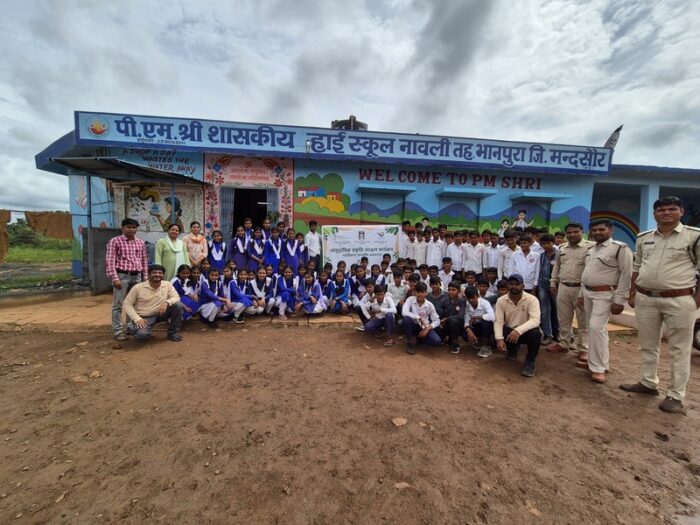
To establish a strong foundation, we engaged consistently with Forest Department ground staff through regular field interactions, capacity-building modules, and facilitated dialogue with forest-dependent communities. Nature and wildlife education programmes were initiated in villages and government schools to encourage conversations around forests, conservation, and coexistence. We also facilitated coordination between government departments and village communities to improve access to welfare schemes, supported efforts to restore water bodies, and worked with local leaders to enable timely responses to wildlife-related conflicts, grievances, and emergencies helping build trust at both community and local governance levels.
Current Scope of Work
Today, our work spans 15 villages across the Gandhi Sagar landscape. Key interventions include:
- Snakebite prevention and mitigation workshops
- Community outreach, education, and awareness programmes
- Facilitation of government welfare schemes and entitlements
- Meetings with government officials for restoration or construction of water bodies
- Knowledge partnership support for the Nature Information Centre
- Capacity building and training for forest personnel
- Nature Guide training programme for local youth
- Human–wildlife conflict mitigation and response support
- Skill development for alternate livelihoods to reduce forest dependence
- Green Day celebrations and conservation events
- Livestock health and support initiatives
Impact in Gandhi Sagar Wildlife Sanctuary
- 1 water harvesting structure developed
- 3 key government liaisons resulting in improved planning
- 6 homestays identified for visitors
- 23 youth trained as local Nature Guides
- 23 forest guards trained through MBMA
- 48+ farmers directly benefited through government schemes
- 1,590 cattle vaccinations facilitated
- 76,500+ indirect beneficiaries reached
Today, our work in Gandhi Sagar is anchored in consistent field presence, strong local partnerships, and shared responsibility. The foundation laid since 2023 continues to guide our efforts toward coexistence, community resilience, and long-term conservation in the landscape.